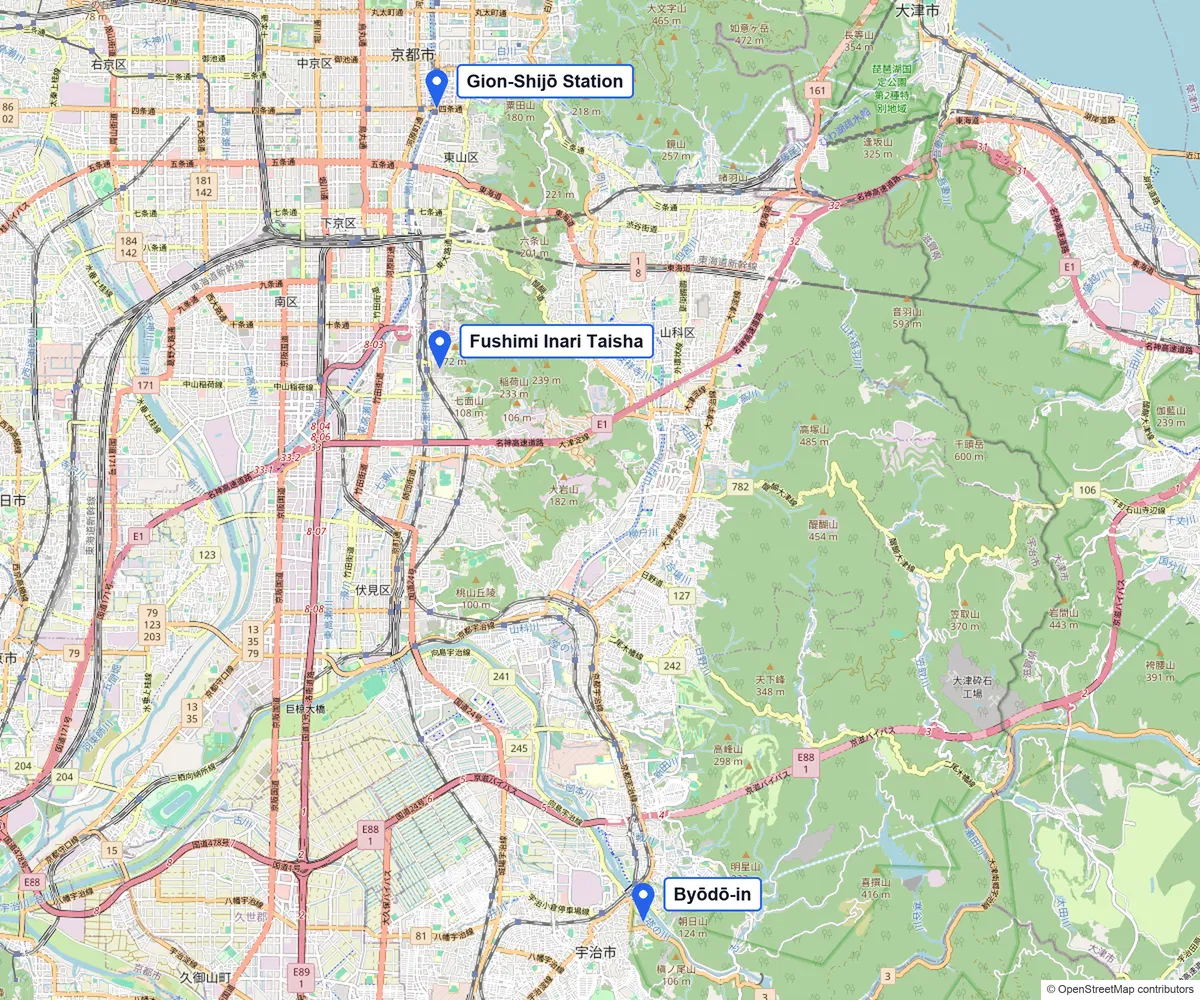
Fushimi Inari and Byōdō-in
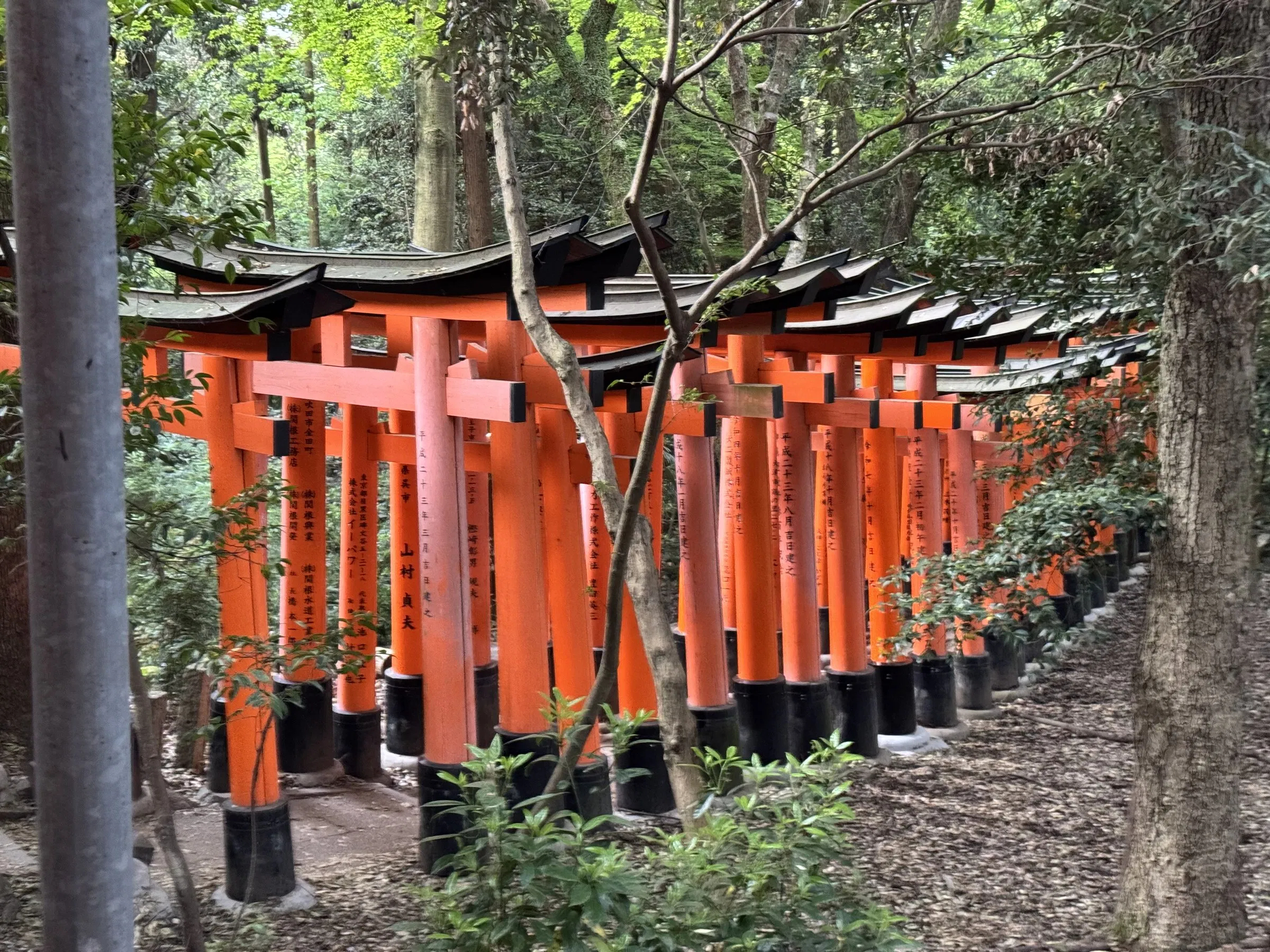
In April I left at 5 a.m. to get across Kyoto. Fushimi Inari is one of the busiest sights in Japan, and the only way to walk its torii without a crowd is to get there before everyone else does.
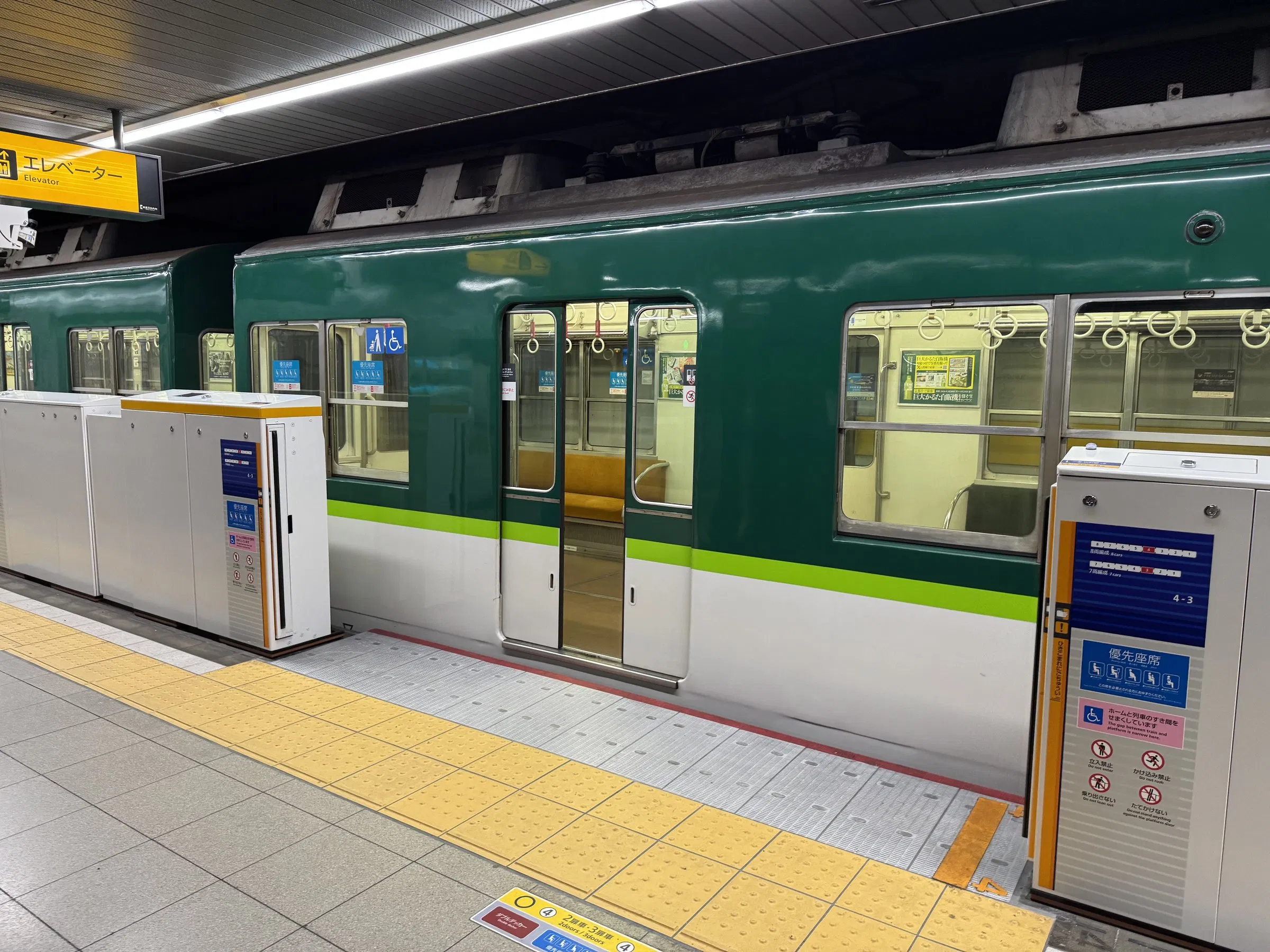
The Keihan line runs from Gion-Shijō straight down to the shrine. At that hour the platform was empty.
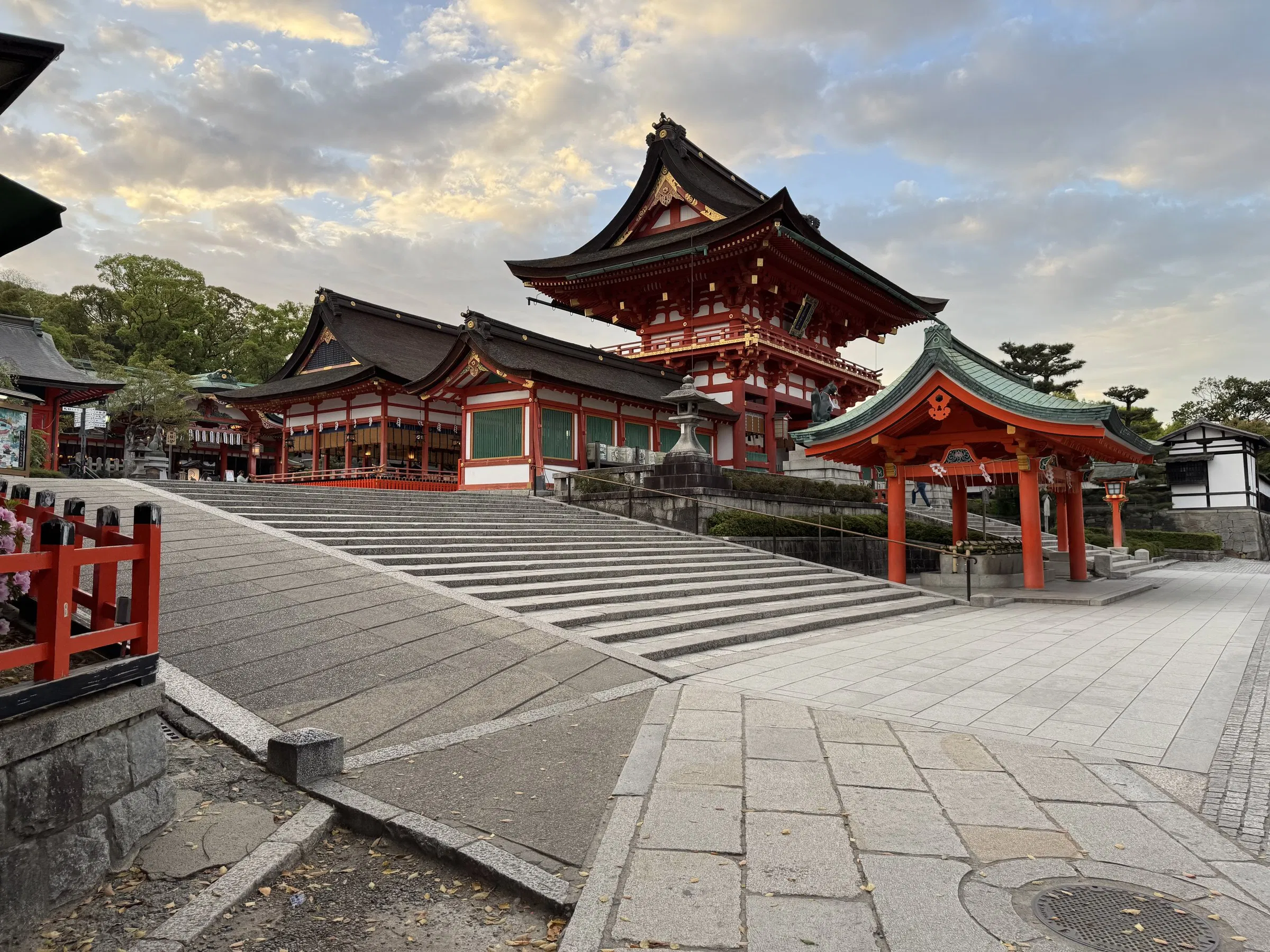
Fushimi Inari Taisha is the head shrine of Inari, the kami of rice, and so of prosperity and business. There are tens of thousands of Inari shrines across Japan, and this is the one they all come back to. The tower gate is said to have been given by Toyotomi Hideyoshi in 1589.
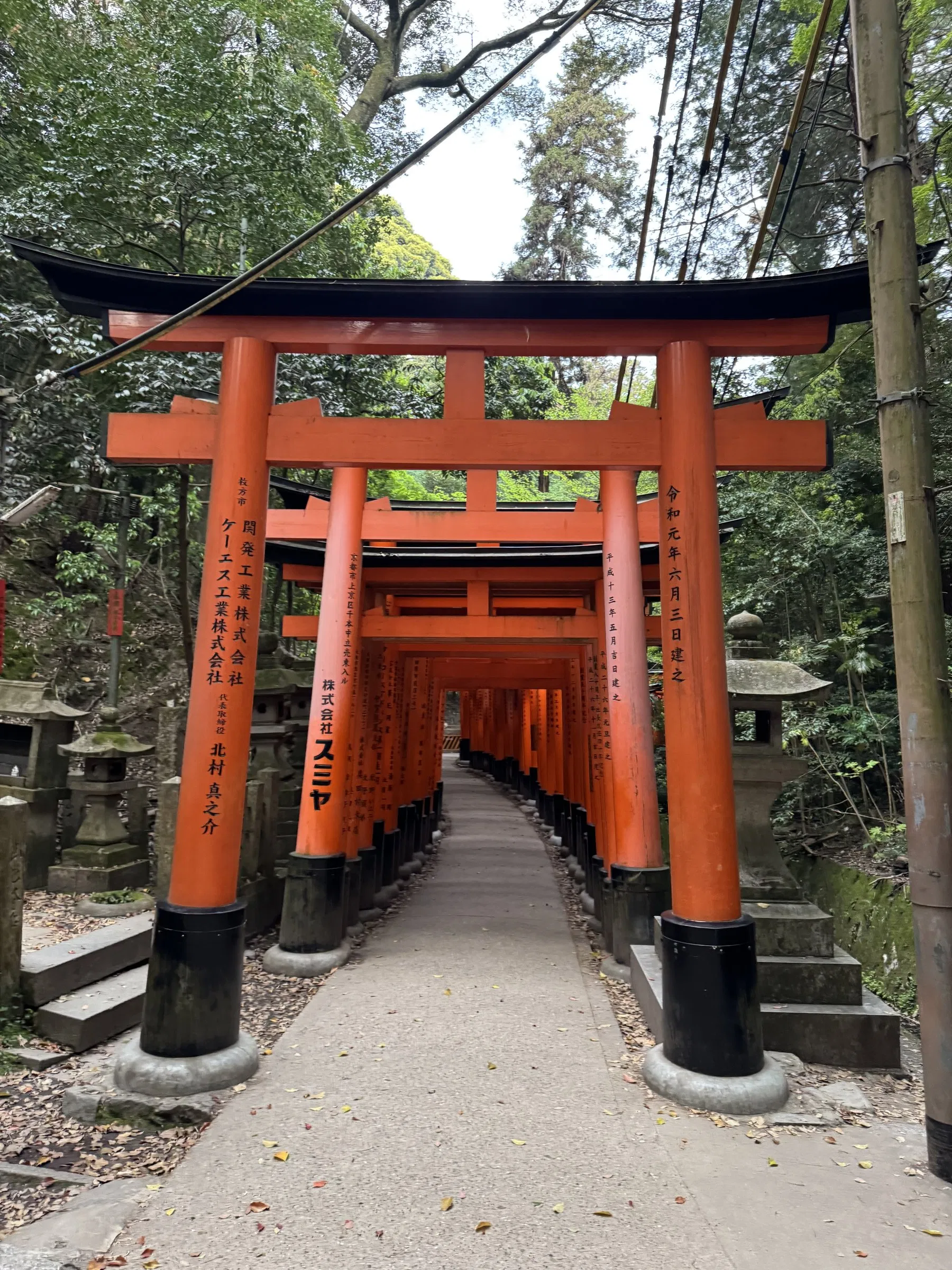
Every torii was given by someone: a person, a family or a company. The donor’s name and the date are painted in black down the pillar. Businesses give them for luck, which is how the paths up the mountain came to be lined with them, thousands of gates back to back.
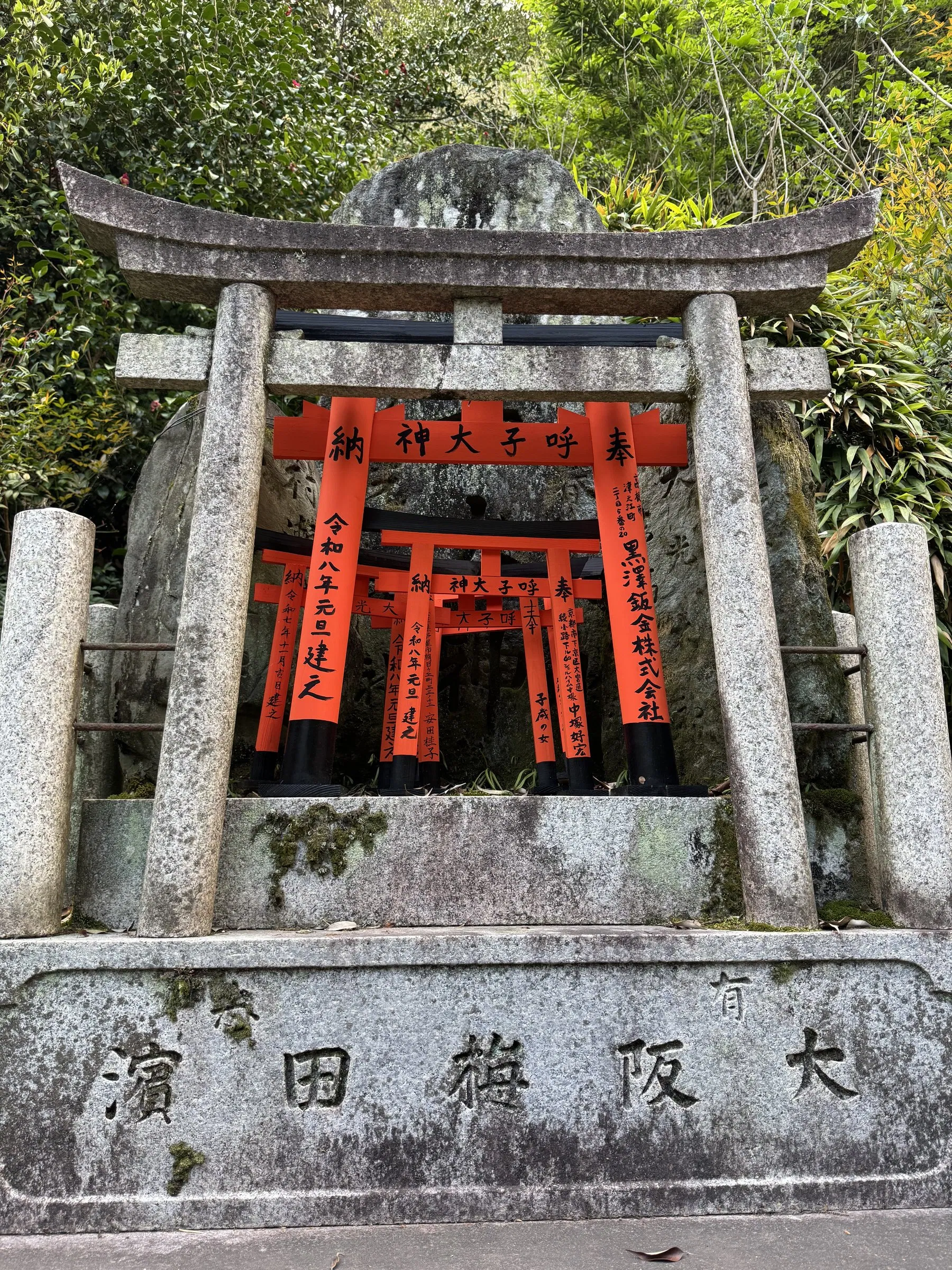
Smaller torii are left as offerings at the shrines along the way.
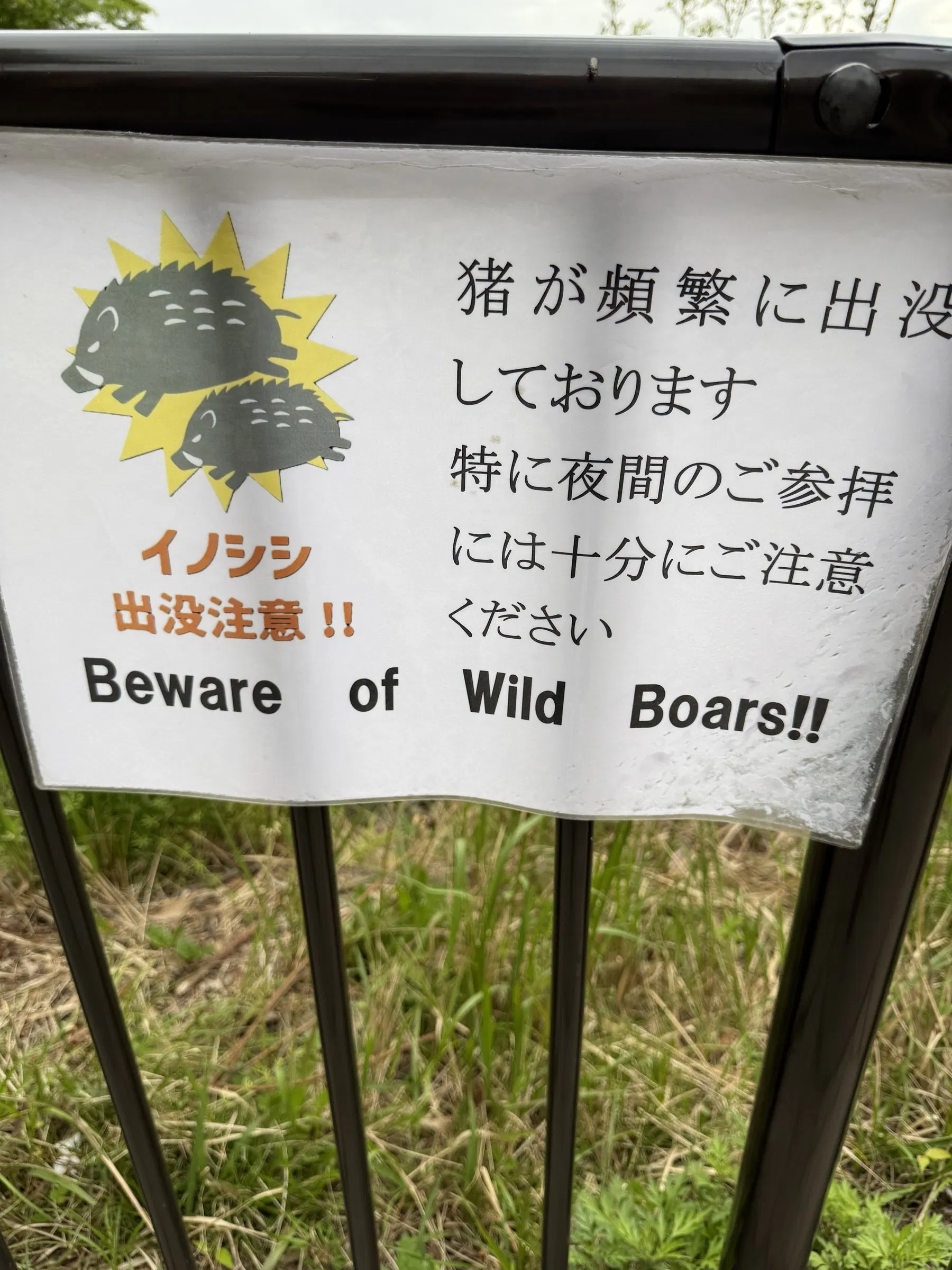
The trail climbs Mount Inari, 233 metres, with smaller shrines all the way up. The signs warn that boars come out often, especially at night.
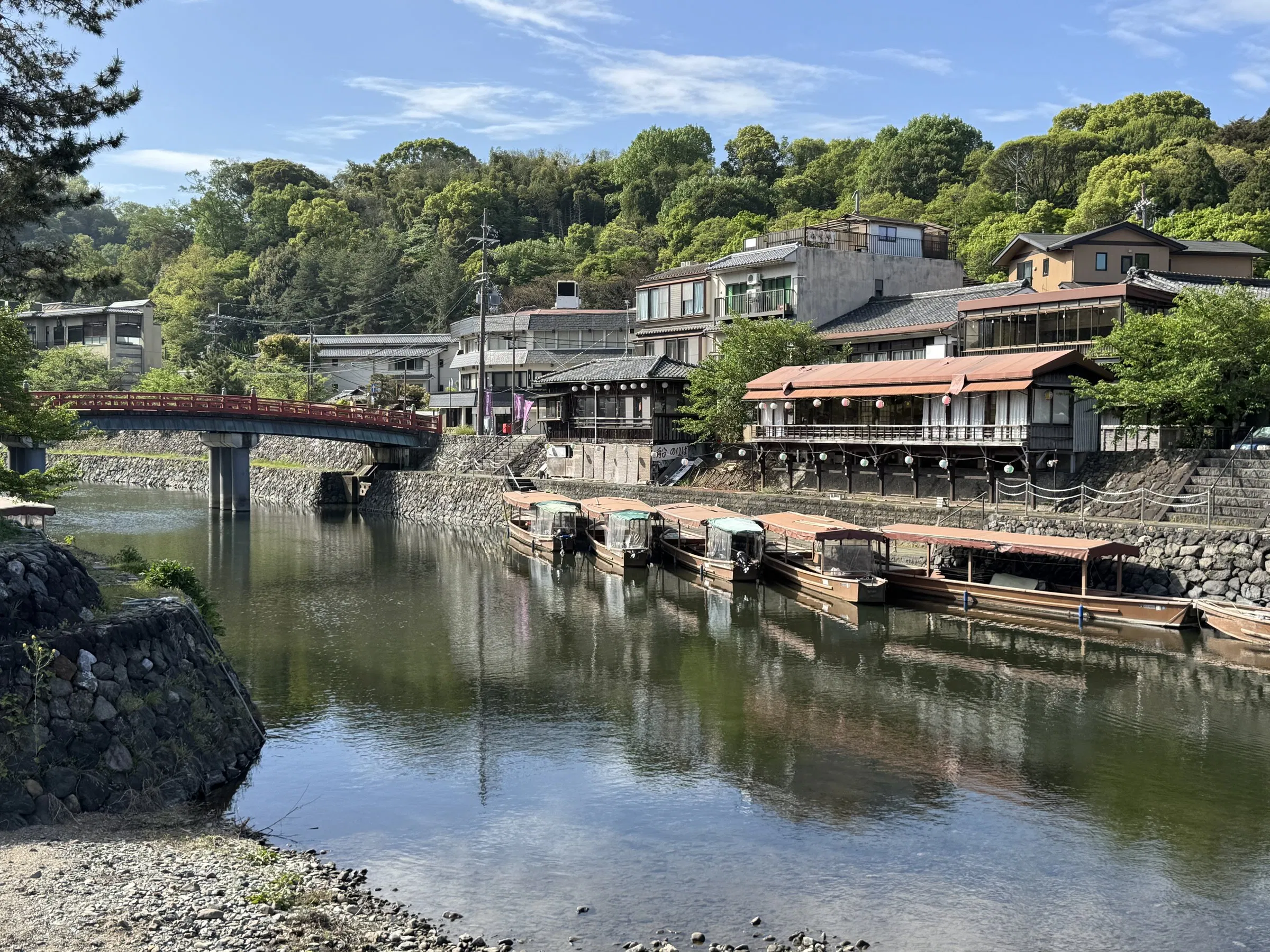
From there I switched to the JR Nara Line to go south to Uji, a small town on the Uji River, famous for its green tea. The boats moored along the bank take people out in summer to watch the cormorant fishing at night. I was excited to see the boats and thought I might get to ride up the Uji River, but they weren’t operating at the time.
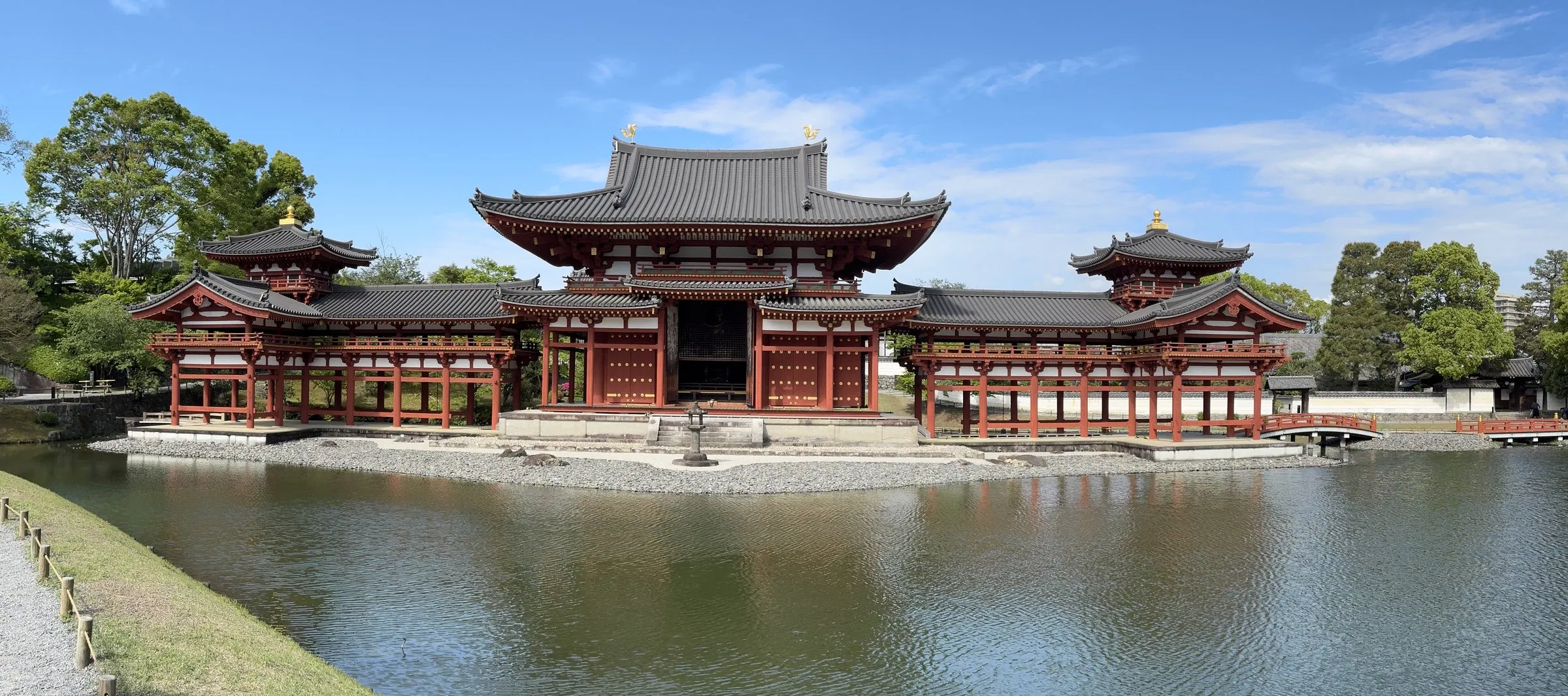
Byōdō-in began as a country villa of Fujiwara no Michinaga, the most powerful man at the Heian court. His son Yorimichi made it a temple in 1052, and the Phoenix Hall went up the year after. It sits across a pond, built to look like the palace of the Amida Buddha in the Pure Land, and it has been standing for nearly a thousand years. It is the building on the back of the ten-yen coin.
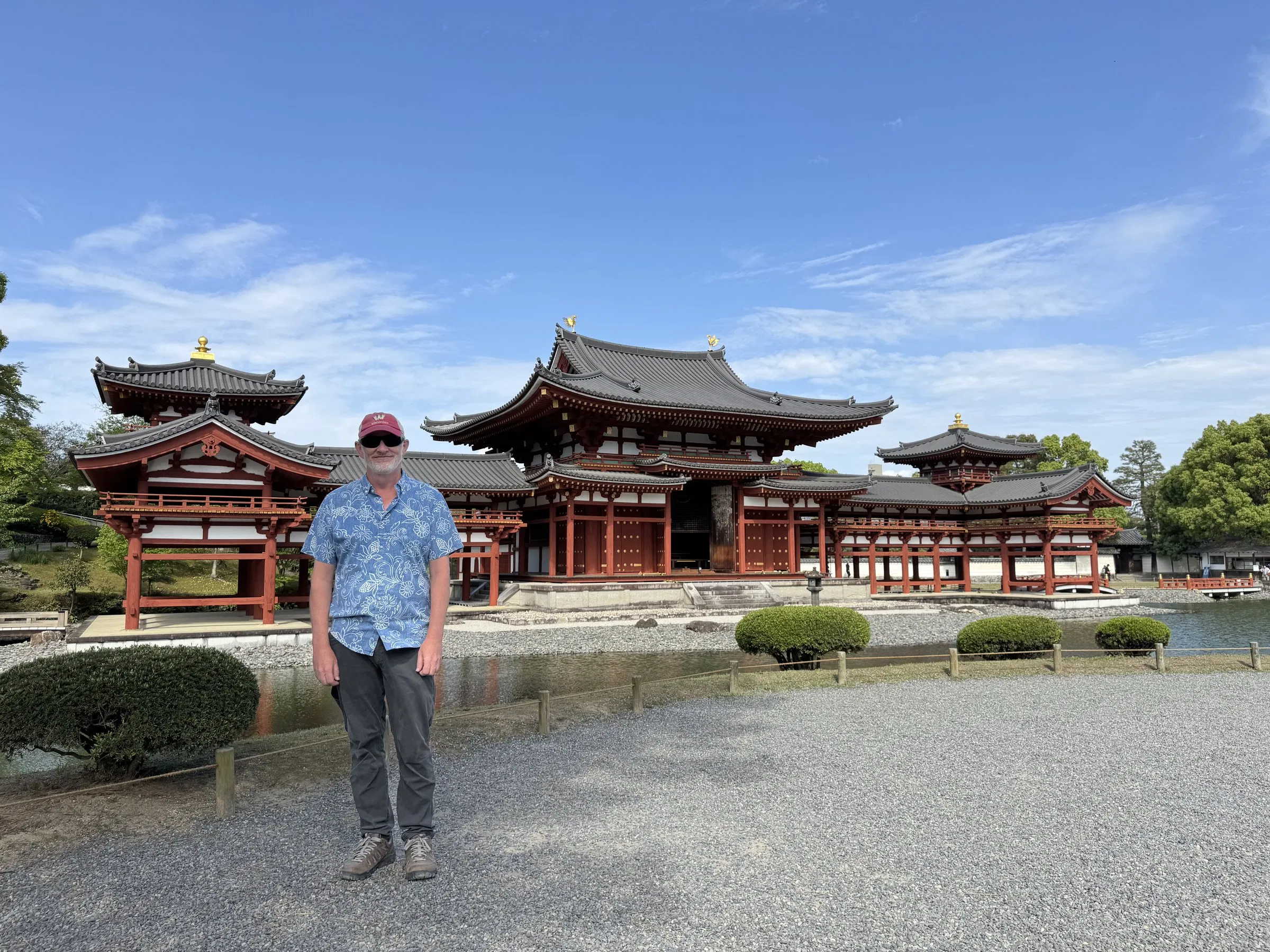
It is called the Phoenix Hall for the two bronze phoenixes on its roof, and because from the front, with a corridor out to each side, the whole building looks like a bird with its wings spread.
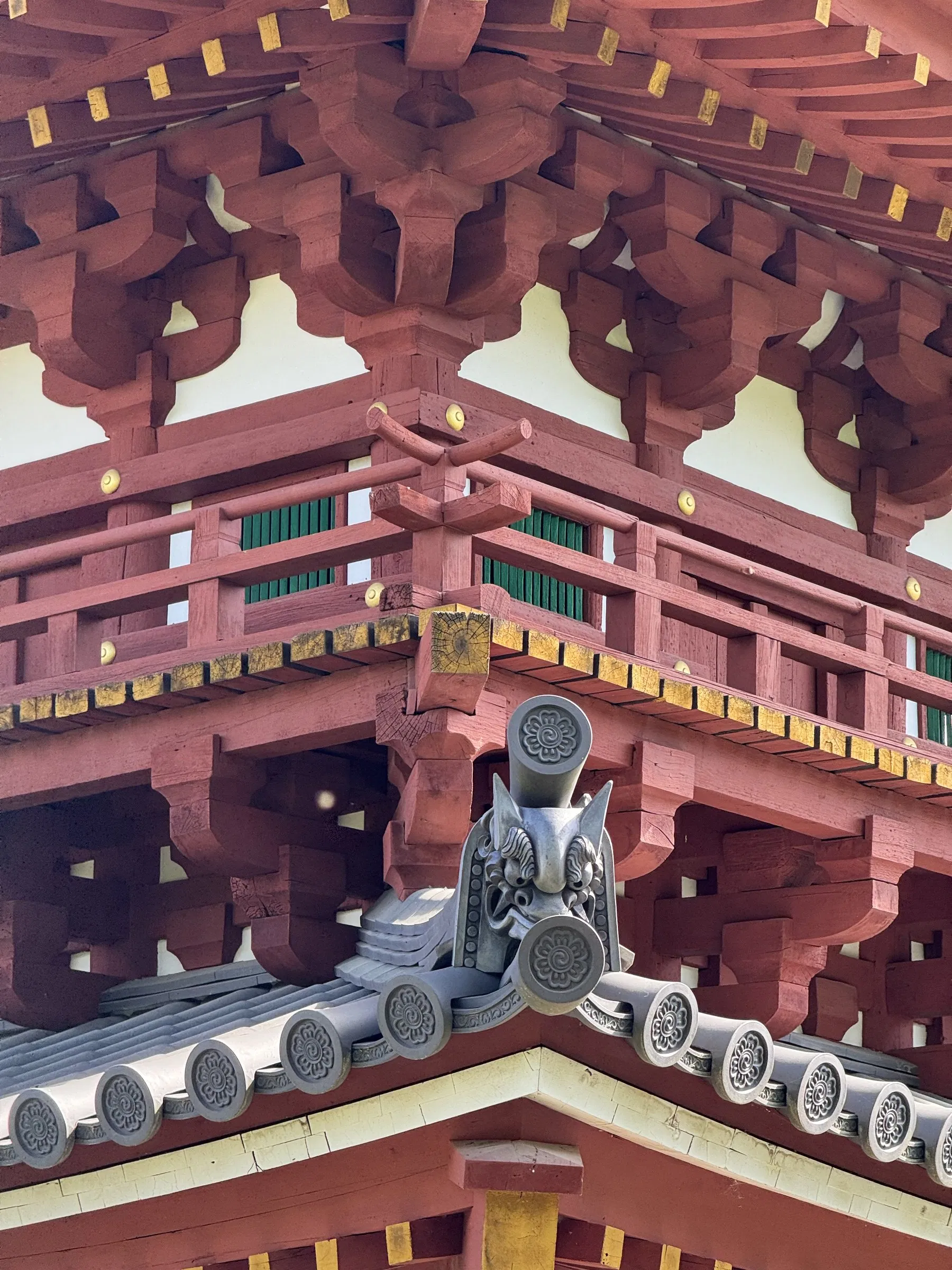
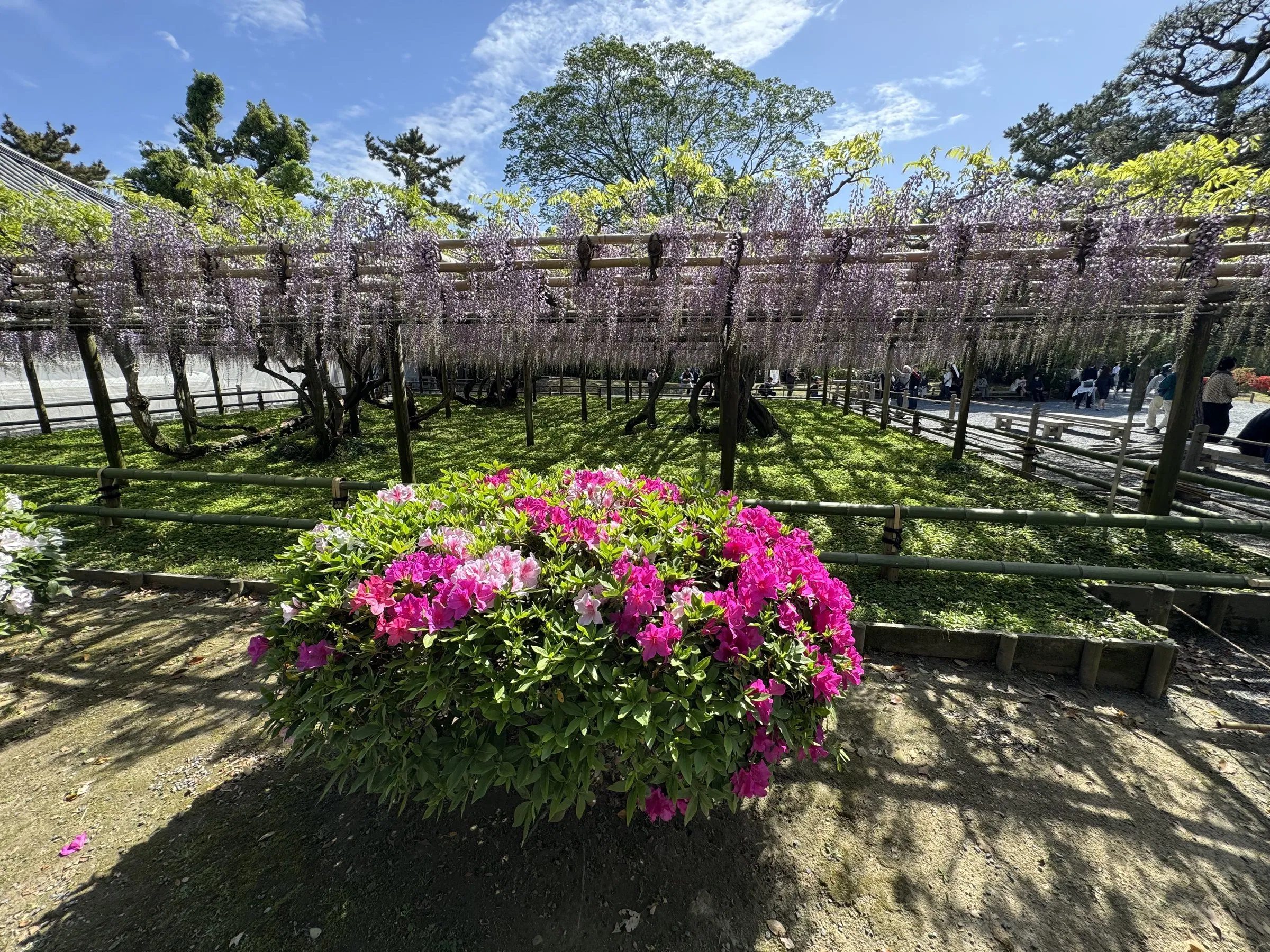
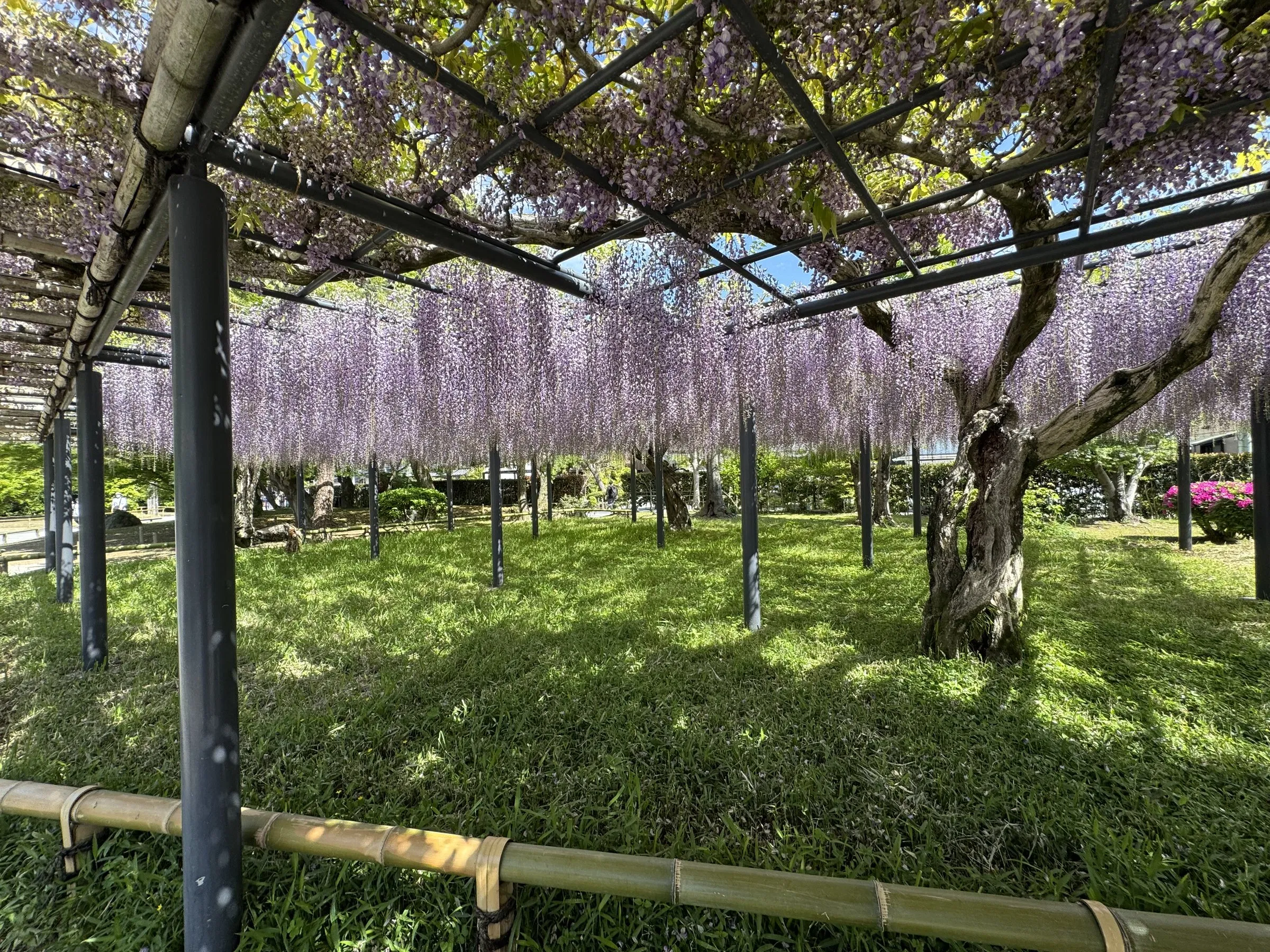
I was there in the right week for the wisteria. The temple’s old vines are trained over a long trellis, and the azaleas were out under them.
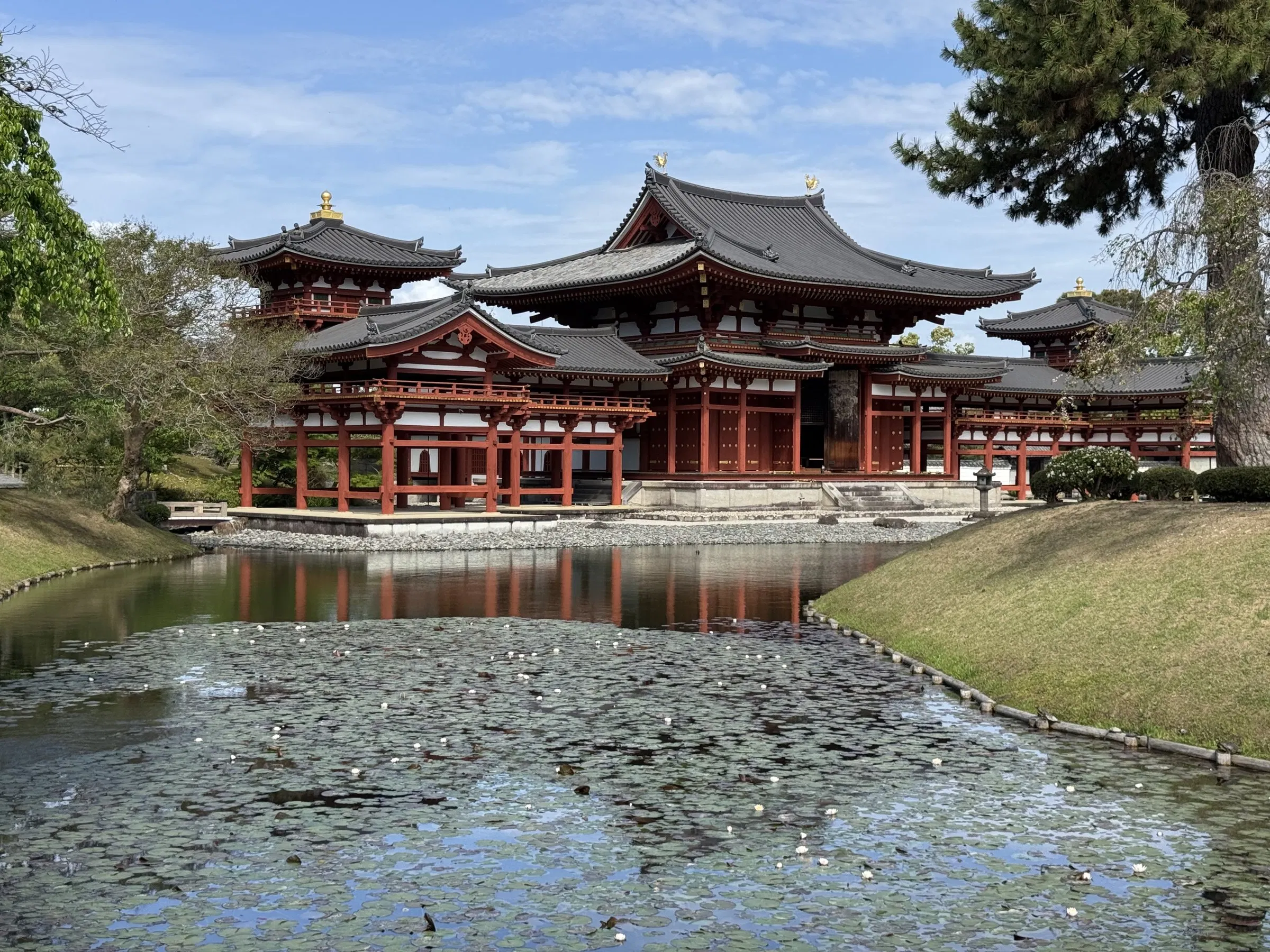
The reason I went to Byōdō-in is because in Oʻahu, in the Valley of the Temples in Kāneʻohe, at the foot of the Koʻolau mountains, there is a smaller copy of the Phoenix Hall. It was built in 1968 to mark a hundred years since the first Japanese immigrants came to Hawaiʻi. I go whenever I am there, and this was the first time I saw the original.
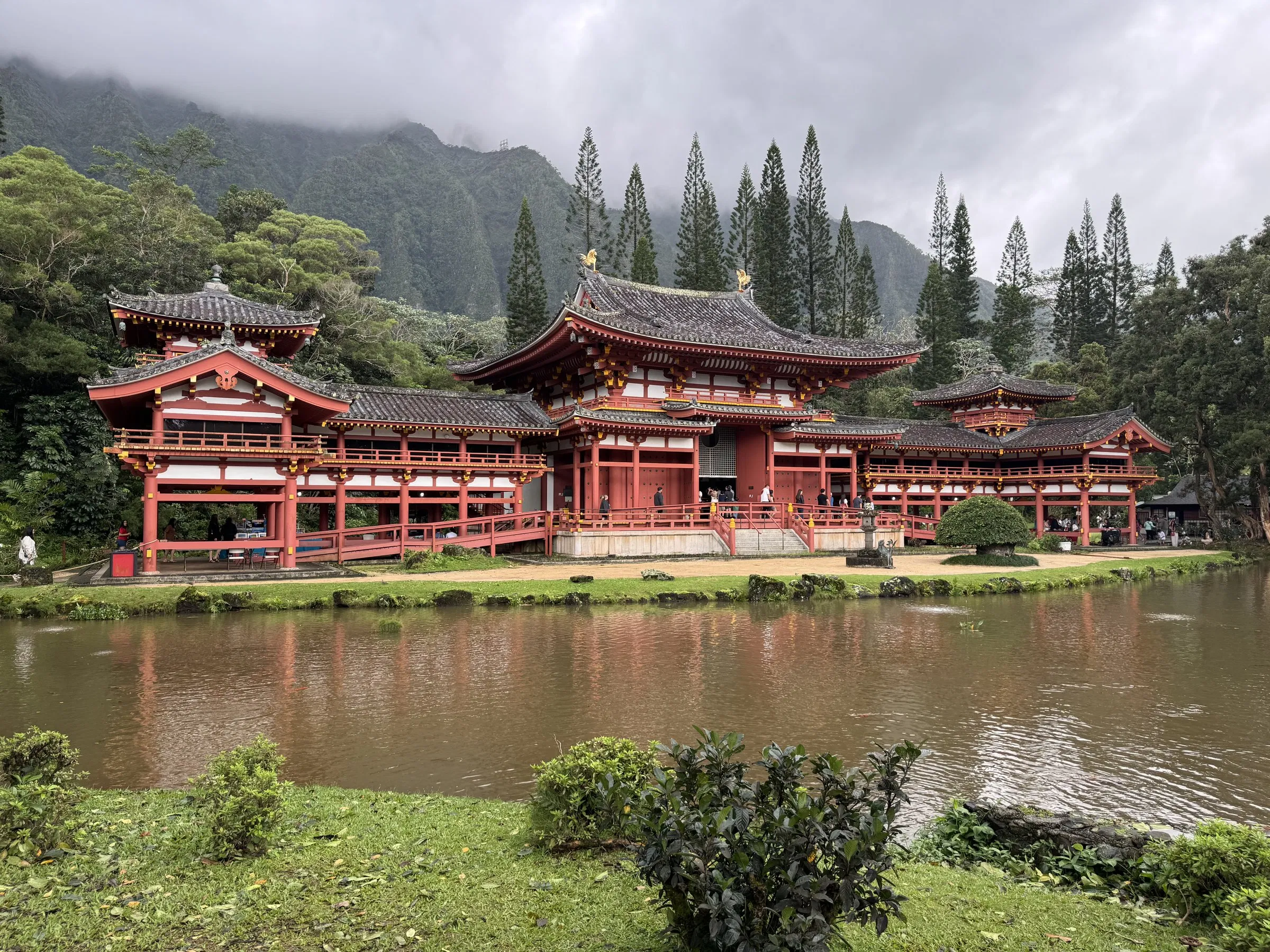
That is the replica, in March.