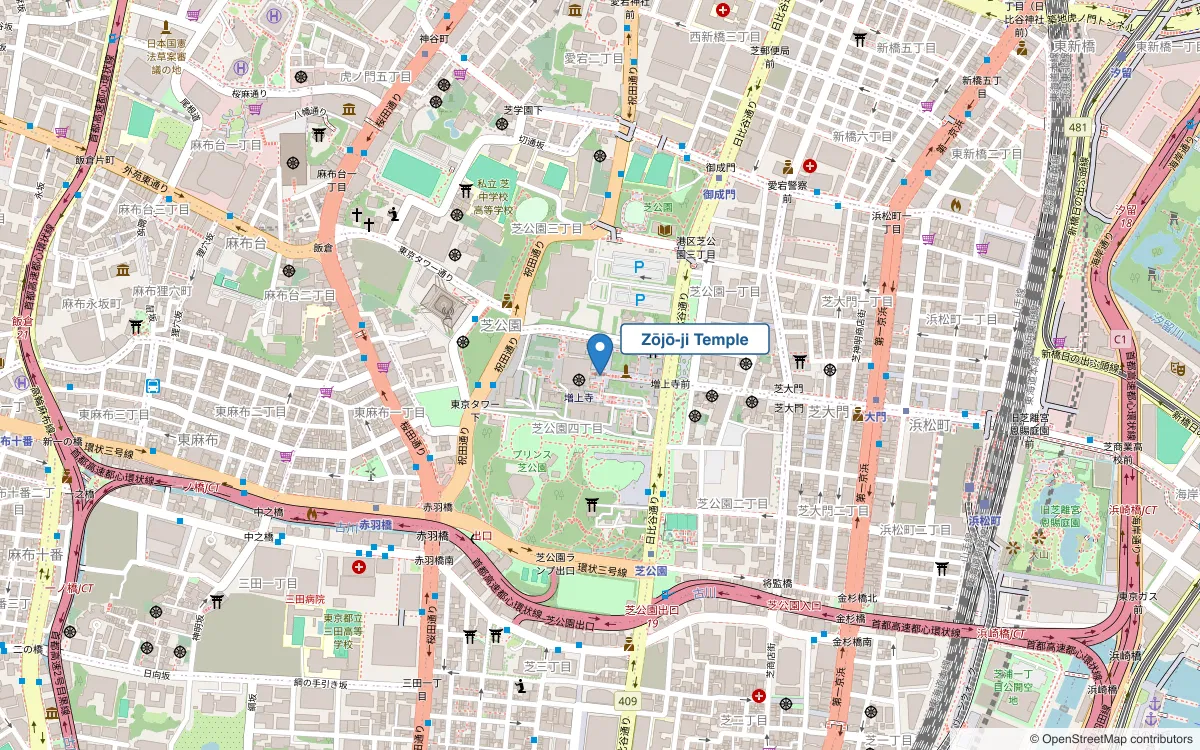
Bugaku at Zōjō-ji Temple
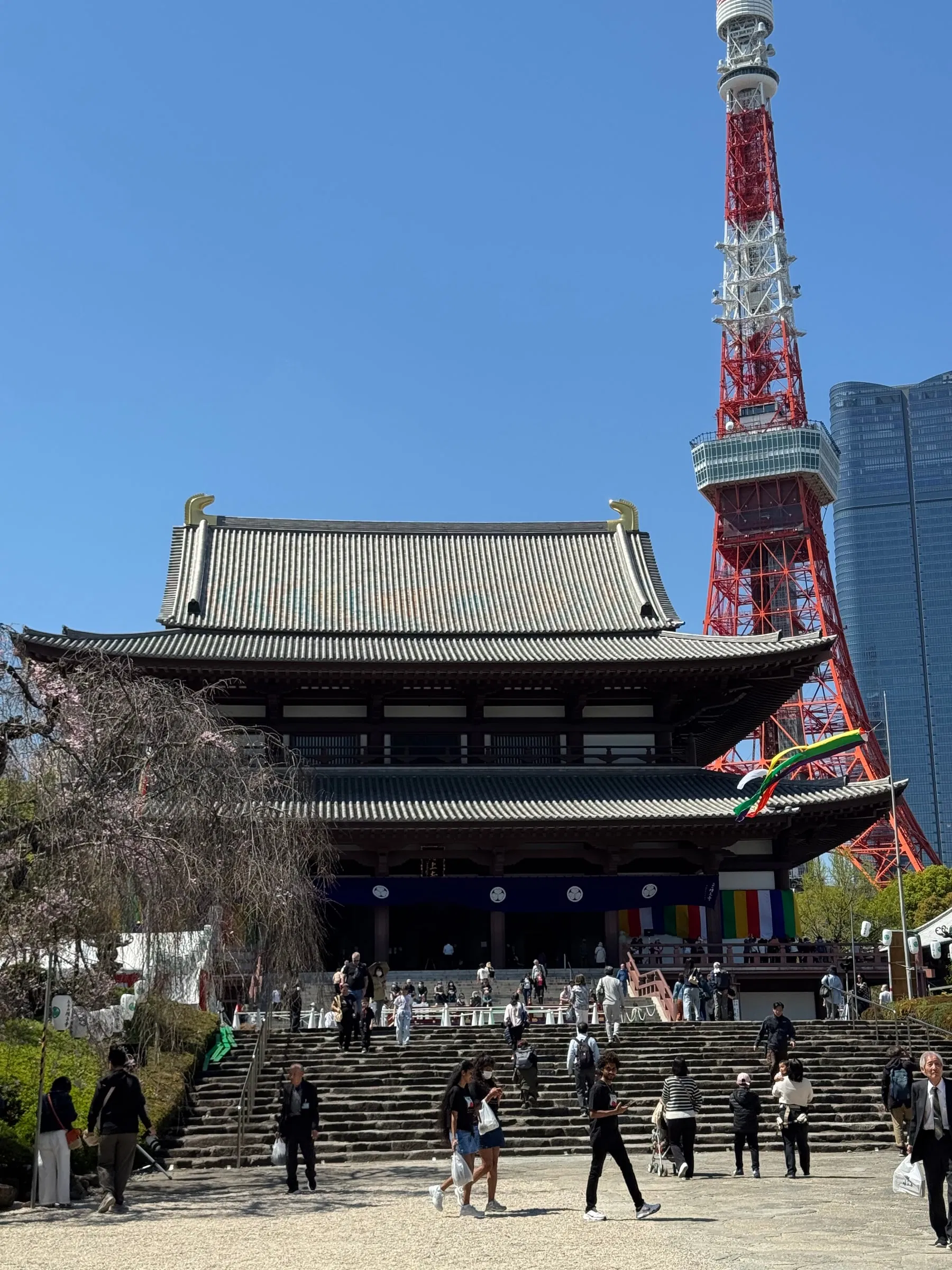
In April I was at Zōjō-ji, the big temple at the foot of Tokyo Tower, during Gyoki-e. Every year from April 2 to 7 the temple remembers Hōnen, the founder of its Jōdo sect, who died in 1212, and around noon each day there is bugaku on a stage in front of the main hall.
Bugaku is Japanese court dance with its own music. It came over from the Asian mainland in the eighth century and has been kept going, more or less as it was, by the imperial court and a handful of temples and shrines ever since.
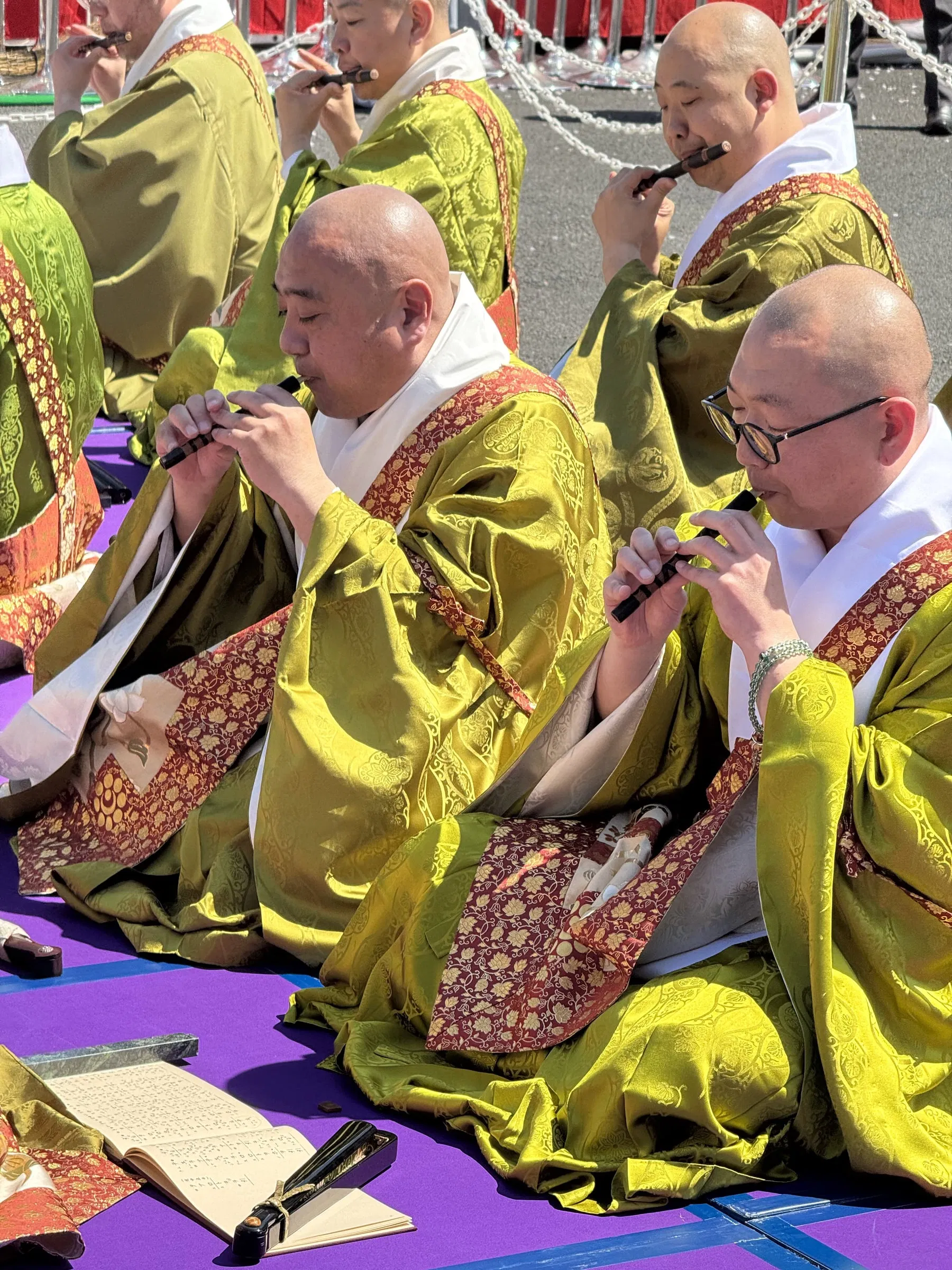
The music came from monks sitting on a purple carpet beside the stage. They are playing hichiriki, short bamboo pipes with a big double reed, the nasal voice that carries the tune in gagaku. The score lay open in front of them.
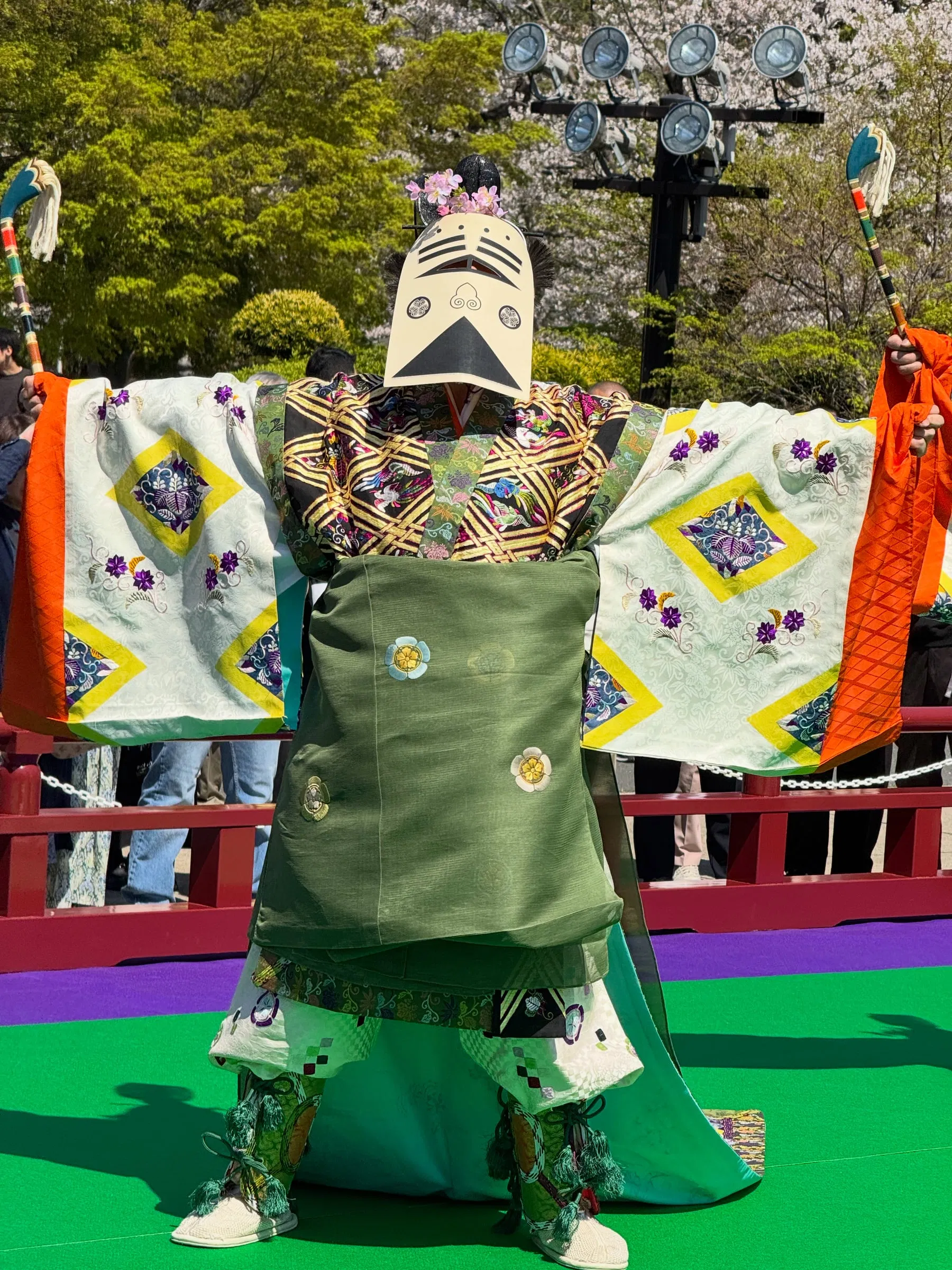
The dancer is doing Ama. The mask gives it away. Most bugaku masks are carved wood. This one is a flat sheet of white paper, a zōmen, with the eyes, brows, nose and beard painted on in black. Ama usually opens a programme. The story is that it came from China in 736 and was reworked at the Heian court in the ninth century. Its name can mean heaven, and it is paired with Ni-no-mai, whose dark, grotesque masks stand for the spirits of the earth.
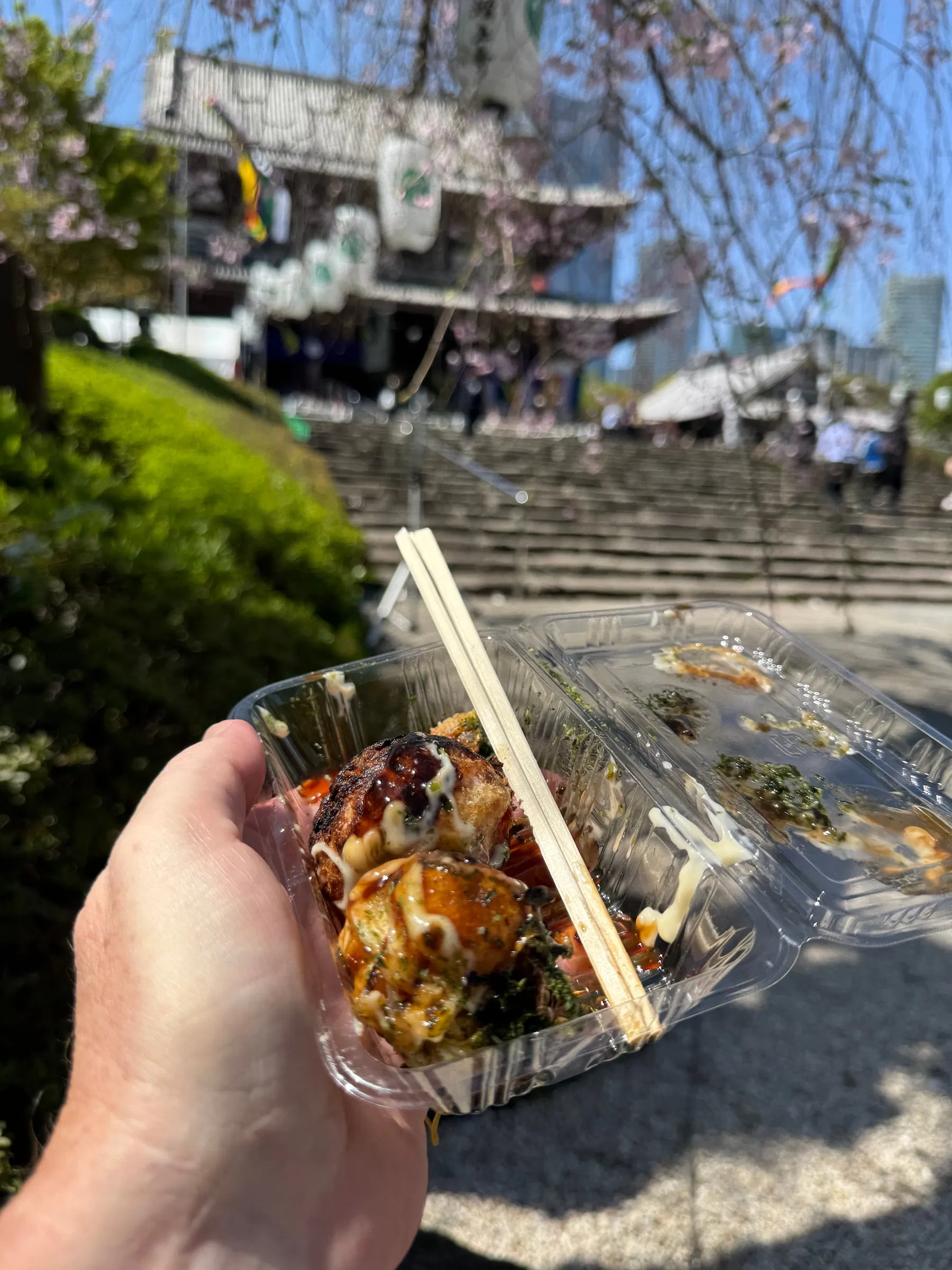
At a stall at the foot of the steps I bought takoyaki: balls of batter with a piece of octopus inside, covered in sauce, mayonnaise and seaweed. They were the best takoyaki I have ever had.